By Micalagh Moritz
At a recent youth event, we spent the weekend at the Claggett Center. The Claggett Center is the Camp and Conference Center of the Diocese of Maryland, and it is located outside of Frederick, Maryland. Our theme verse for the weekend was 1 John 4:19: “We love because God first loved us,” and we found a unique way to share God’s love on a hike around the property with a smaller group.
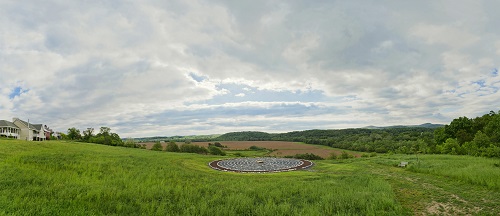
The hike led us past a very old graveyard. Years ago, Claggett Center uncovered this graveyard, and though they were not able to identify the man buried there by name, they surmised that he had been an enslaved man of African descent. As a part of their racial justice work, the Diocese of Maryland created a memorial at this spot to honor a man who could not be identified, and who was not treated with the dignity he deserved in his lifetime. The plaque at the cemetery explained that the family who “owned” this land had built a family cemetery with a stone wall around it, and that several enslaved people had also been buried in it.
On the bottom left hand corner, there is a message from The Right Reverend Eugene Taylor Sutton, Bishop of Maryland in 2013. It reads, “The Episcopal Diocese of Maryland is aware of how much it has benefited materially and financially from slavery, and we repent of our complicity in the sins of slavery and racism. Archival knowledge of some of the enslaved people who lived and worked on this plantation puts a human face on a practice that robbed both slaves and masters of dignity and humanity.”
The first time I visited the cemetery in winter of 2023, I wrote this:
As I walked into the graveyard, I saw a large stone in the corner, with a plaque marked “Gravesite of an unknown enslaved man of African descent.” The stone was surrounded by smaller stones with hand-drawn hearts and messages like “Deep peace” and “Beloved.” There were flowers under the snow that, while frozen and wilted, looked like they had been left not so long ago. A few flowers had been strewn to the left, and I picked them up, and placed them back by the stone: my own minute contribution to a recognition of the humanity and belovedness of this unknown soul buried below.
I sat on the nearby bench and wept—for this man, for the many lost and unknown souls touched by slavery, for the many people affected by racism in our present moment. I also wept with hope for the work that can be done to repair and renew, even in the face of great loss. These stones and flowers—this marker of remembrance—do not bring back a life or take away from the terror and travesty for generations of those enslaved. But they offer a reminder that we can and must acknowledge the past, and then vow to be better, to do better.
Flash forward to the youth event a year and a half later, I found myself standing at the same spot. As several young people read the plaque, I invited them to place a flower on the gravesite and briefly shared about the background and history of the spot where we stood. The group of youth, even the youngest ones, seemed to understand the sacredness of this place, and many picked a small flower from the field to lay on the grave. The group held space in silence until we walked away from the gravesite, back down the hill and towards the river.
Learning about and acknowledging history is one step in the work of racial justice and reconciliation. One of the ways I do this personally is through my work on the diocesan Dismantling Racism Commission (DRC) in partnership with our local Nathan Baxter Chapter of the Union of Black Episcopalians (UBE). Another way is by continuing to educate myself— reading articles and books about what racial injustice and resistance have looked like through history. I also read books with my kids, and have conversations with them about racism and the ways people have stood up against racism throughout history. Sometimes we take part in a rally or protest, sometimes we call our legislators, and other times we show up for a neighbor in need. We can all be a part of the work of racial justice, from the youngest to the oldest. As our theme for our youth weekend reminded us, we can live out our call to love others because God first loved us, and we can do this in large and small ways.